
Referral marketing for contractors is the deliberate work of turning satisfied customers into a steady source of new leads. Most contractors get referrals by accident and leave it there. But word of mouth is the most trusted marketing on earth, and treating it as a system instead of luck is one of the highest-return moves a contracting business can make.
Key Takeaways
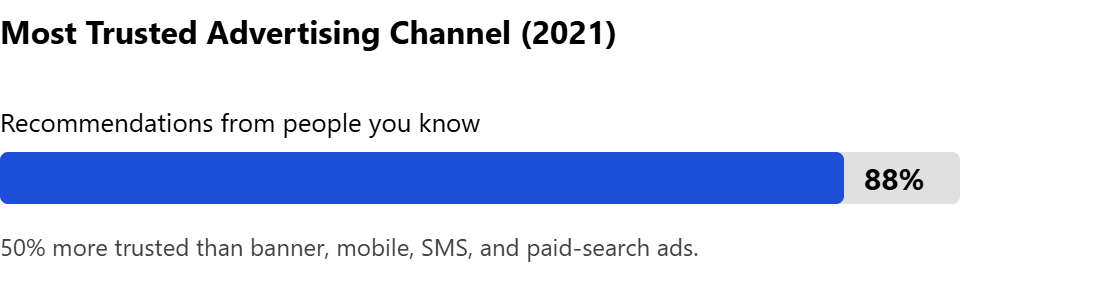
88% of people trust recommendations from someone they know more than any other channel (Nielsen, 2021).
Nielsen found 50% more people trust personal recommendations than banner, mobile, SMS, or paid-search ads.
Referrals are your cheapest, highest-trust lead source — and the one most contractors leave to chance.
A referral system is simple: ask at the right moment, make it effortless, give a reason, and follow up.
Why Is Referral Marketing So Powerful for Contractors?
Because trust is the whole game in the trades, and nothing carries more trust than a personal recommendation. Nielsen found that 88% of people trust recommendations from someone they know above any other channel, and that 50% more people trust those recommendations than banner, mobile, SMS, or paid-search ads (Nielsen, 2021).
For a homeowner deciding who to let into their house, a neighbor’s “we used them and they were great” outweighs any ad you could buy. That’s why a referred lead usually closes faster and haggles less — the trust work is already done before you pick up the phone.
Why Do Most Contractors Leave Referrals to Chance?
Because the work speaks for itself, so it feels awkward to ask. A contractor finishes a great job, the customer is thrilled, and everyone moves on — no ask, no reminder, no path for that goodwill to become a lead. The referral that would have happened simply doesn’t.
The fix isn’t to be pushy. It’s to make referring you the easy, natural next step after a job well done. A happy customer usually wants to help; most just need a nudge and a simple way to do it.
How Do Contractors Build a Referral System?
Turn goodwill into a repeatable process with four moves. None of them require a budget — just consistency.
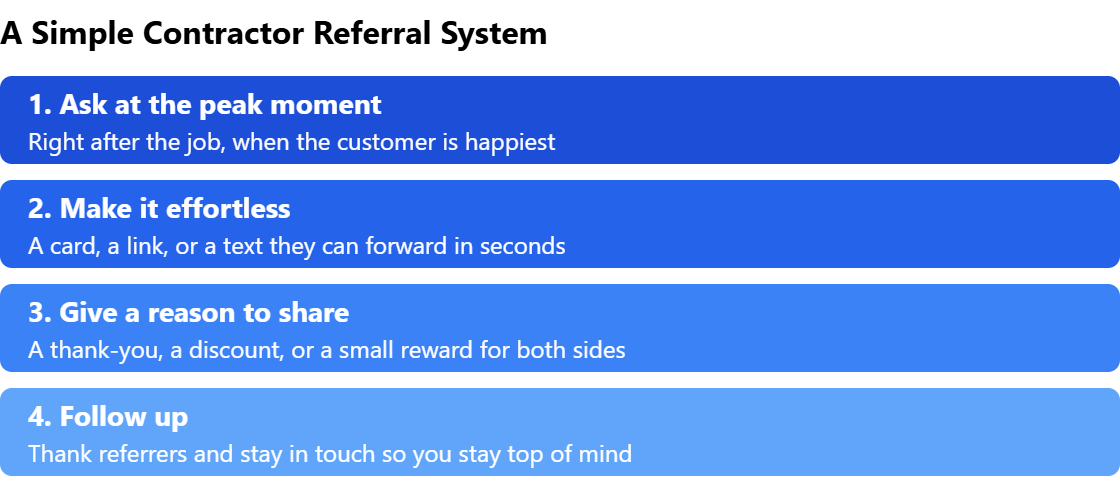
What we see: The single biggest unlock is timing the ask. Contractors who ask for a referral in the glow right after a finished job get far more than those who ask weeks later or never. The goodwill is real — it just has a short shelf life, so build the ask into your closeout routine.
How Does Referral Marketing Fit With Reviews and Email?
They’re the same trust engine pointed at different audiences. A public Google review is a referral that thousands of strangers can read — 96% of consumers read reviews before choosing a local business (BrightLocal, 2025) — which is why review generation and referral marketing belong in one motion.
Email is how you keep that goodwill alive between jobs, and a strong reputation is what makes people comfortable referring you at all. Together with lead generation and local SEO, referrals round out a system where every happy customer becomes a source of the next one.
Ready to Turn Customers Into Your Best Sales Team?
Your happiest customers want to help — most just need to be asked. RAD SEO helps contractors build referral and reputation systems that produce leads on autopilot. Get your free marketing plan or call (866) 968-8171 today.
Frequently Asked Questions
Does referral marketing really work for contractors?
Yes — it’s the most trusted marketing there is. Nielsen found 88% of people trust recommendations from someone they know above any other channel (Nielsen, 2021). For a trust purchase like hiring a contractor, a personal recommendation outperforms any ad you can buy.
When should I ask a customer for a referral?
Right after you finish the job, when the customer is happiest. Goodwill has a short shelf life, so build the ask into your closeout routine rather than waiting weeks. Asking at the peak moment is the single biggest driver of how many referrals you get.
Should I pay customers for referrals?
A modest thank-you or reward for both the referrer and the new customer can boost participation, and it’s usually far cheaper than buying leads. Keep it simple and genuine — the trust in a personal recommendation is what does the work, so don’t make it feel transactional.
How is a referral different from a Google review?
A referral is a private recommendation to one person; a Google review is a public one thousands can read. Both come from the same happy customer, so ask for both at once. Reviews scale your reputation, while direct referrals tend to close fastest because the trust is personal.
How do I keep referrals coming consistently?
Make it a system: ask at the peak moment, make sharing effortless, give a reason, and follow up. Then stay in touch with past customers through email and a strong reputation so you remain top of mind the next time someone they know needs your trade.
The Author
Chadwick Simpson is the founder of RAD SEO, a marketing agency built exclusively for contractors and home-service businesses. A former remodeling contractor himself, Chadwick helps contracting companies turn satisfied customers into a steady source of new work.
Sources
Nielsen, Beyond martech: building trust with consumers and engaging where sentiment is high, retrieved 2026-07-23.
BrightLocal, Local Consumer Review Survey 2025, retrieved 2026-07-23.